The Reality of the Frontline for Wildfire and Forestry Service Companies
In wildfire and forestry services, the mission is urgent, but the compensation doesn’t follow suit. Companies are expected to mobilize crews and heavy equipment within hours, yet they often wait months for government agencies to settle the bill. This creates a dangerous “liquidity trap”: the more work a company takes on, the faster they run out of cash to fund it.
The Strategic Pivot
This case study examines the transition from passive waiting to active capital management by treating unpaid invoices as immediate cash rather than a frozen asset. By adopting a specialized factoring framework, forestry and wildfire firms can bypass the standard 60-day government payment lag. Instead of tracking “paper profits” while struggling for liquidity, companies can access up to 90% of their earned revenue within 24 hours of invoice submission, turning completed work into immediate fuel for the next dispatch.
Traditional Banking Barriers for Wildfire and Forestry Service Companies
Most local banks struggle to underwrite forestry companies because their revenue is highly seasonal and unpredictable. A bank looks for steady, monthly cash flow; a wildfire company might see 80% of its annual revenue generated in just four months. This mismatch often results in:
- Limited lines of credit that are “maxed out” mid-season.
- Restrictive covenants that don’t allow for the “spiky” nature of emergency work.
- The requirement of personal collateral (like a home) to secure a business loan.
Industry Context: The “Waiting Game”
In the wildfire and forestry sectors, operational windows are dictated by nature, not spreadsheets. When a fire breaks out or a thinning contract is awarded, the response time is measured in hours, not weeks. This creates an immediate and massive outlay of capital for:
- Rapid Deployment: Upfront costs for fuel, lodging, and transport for crews moving across state lines.
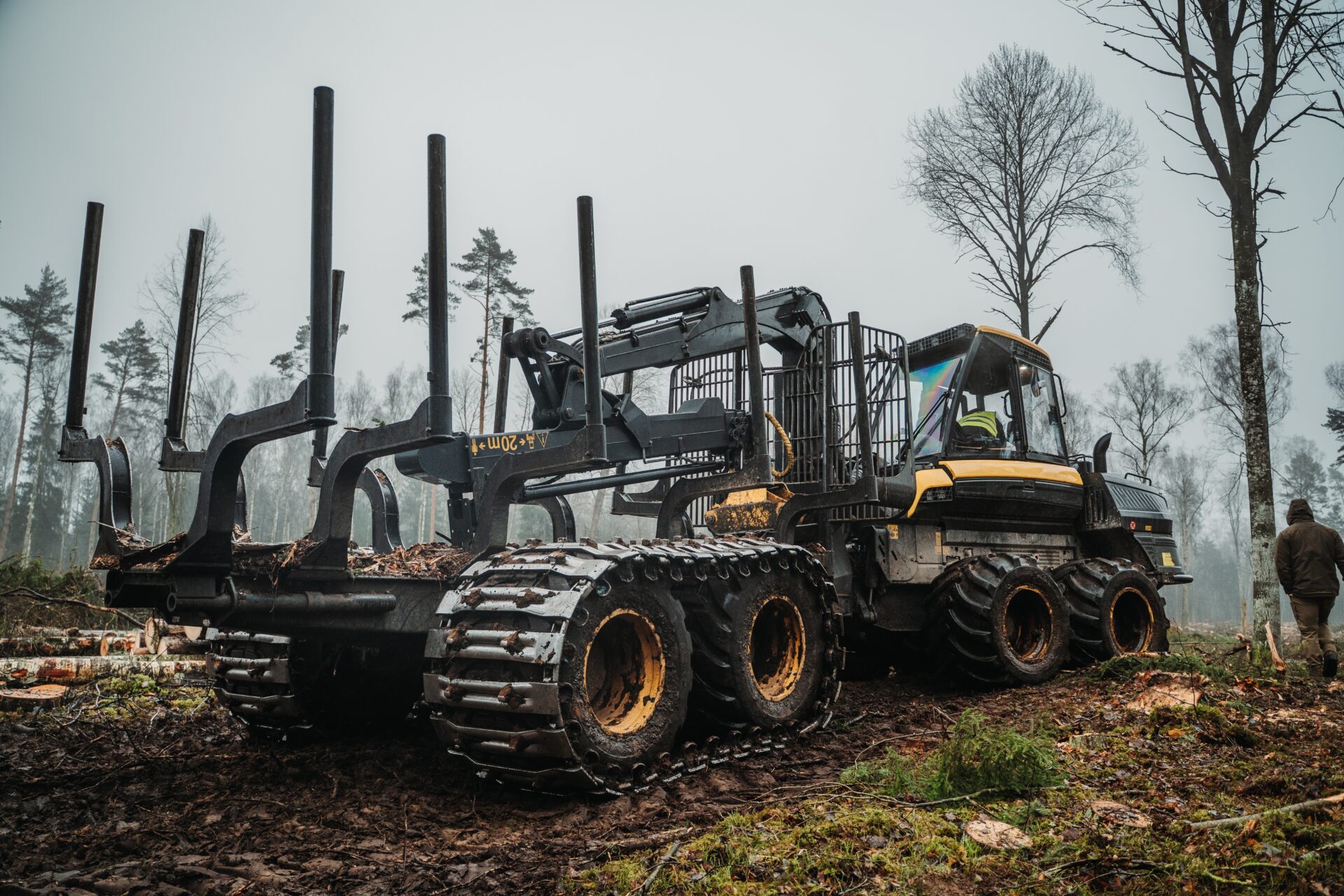
- Asset Readiness: Heavy machinery, masticators, dozers, and engines, requires expensive, specialized maintenance to meet rigorous safety inspections before hitting the line.
- Labor Reliability: Retaining skilled chainsaw operators and fire crews requires consistent, weekly payroll, often including significant hazard pay and overtime that cannot be deferred.
The Bureaucratic Bottleneck
While the work is high velocity, the reimbursement is notoriously slow. Companies typically serve state and federal agencies (e.g., USFS, BLM, or state DNRs). While these entities are “gold-standard” payers in terms of reliability, their administrative cycles are hampered by:
- Complex Audits: Invoices often require multiple layers of signoffs from field officers to regional administrators to ensure compliance with emergency procurement rules.
- Standardized Lag: Government agencies typically operate on Net-60 or even Net-90 terms.
- The “Growth Trap”: In this environment, success can be a threat. A company that wins three large, simultaneous contracts may find itself “paper-rich” but unable to buy fuel for the following week because all its liquidity is locked in the government’s accounts payable system.
The Failure of Traditional Banking
Most commercial banks are poorly equipped to handle the “spiky” revenue profiles of forestry firms. Because income is highly seasonal and unpredictable, traditional lenders often see these companies as high-risk. This mismatch results in:
- Inflexible Credit Lines: Borrowing limits that are “maxed out” by mid-season just when cash flow needs are greatest.
- Restrictive Covenants: Bank requirements that don’t allow for the rapid fluctuations in cash flow common in emergency work.
- Personal Risk: The frequent requirement of personal collateral (such as a home or personal land) to secure a business line of credit, putting the owner’s personal assets at risk for seasonal operational costs.
The Problem: Scaling Under Pressure
The “Paper Rich, Cash Poor” Syndrome
The primary obstacle for expanding forestry and wildfire operations is not a lack of work, but a lack of velocity. When capital is trapped in accounts receivable, the business experiences a “friction” that slows down every department. This manifests in three critical areas:
The Payroll & Retention Crisis
In a labor-shortage economy, specialized fire crews and equipment operators are a company’s most valuable assets. These workers often live paycheck-to-paycheck and cannot afford to wait 60 days for their compensation.
- The Risk: If a company misses or delays a single payroll cycle due to a slow government check, they risk losing their elite crews to competitors who have better liquidity.
- The Cost: Replacing a specialized crew mid-season is significantly more expensive than retaining one, often involving higher “emergency” wages and training costs.
Strategic Paralysis (The Missed Bid)
The most significant “unseen” cost in this industry is the opportunity cost. When an emergency dispatch or a lucrative land-management contract becomes available, it requires an immediate commitment of resources.
- The Bottleneck: If the company’s remaining cash is tied up in existing invoices, the owner is forced to decline new work, not because they lack the equipment or the skill, but because they cannot afford the fuel and insurance to start the job.
- The Long-term Impact: Declining contracts can damage a firm’s reputation with agencies, leading to fewer “first-call” opportunities in future seasons.
Operational Decay and Equipment Downtime
Forestry equipment operates in the most punishing environments imaginable. Proactive maintenance is a requirement for safety and efficiency.
- The Cycle: When cash is tight, companies are often forced to defer non-essential maintenance. This “savings” is an illusion; deferred maintenance leads to catastrophic equipment failure in the field.
- The Result: A masticator or dozer that goes offline during a peak contract costs the company thousands in daily revenue, plus the “rush” fees for emergency parts and repairs.
Vendor Leverage Loss
Cash-strapped companies are “price-takers.” Without the ability to pay upfront, they cannot negotiate volume discounts on fuel, tires, or parts. Over the course of a season, paying “retail” prices for operational essentials can shave 5% to 10% off the total net profit margin.
The Solution: Why Factoring?
Unlike a traditional bank loan, which creates a fixed liability, invoice factoring is a transactional asset exchange. In this model, the forestry company sells its accounts receivable (its invoices to government agencies) to a factoring company at a small discount.
The process is designed for the speed of the industry:
Work Completion: The company completes a job or a billing cycle and submits the invoice to the agency.
The Advance: Within 24 hours, the factoring company advances a significant percentage of the invoice (typically 80% to 90%) directly into the forestry company’s bank account.
The Reserve: The remaining percentage is held in “reserve.” Once the government agency pays the invoice in full, the factor releases the reserve to the company, minus a small service fee.
Strategic Advantages for the Forestry Sector
- Scalability on Demand: Traditional credit lines have a “ceiling.” Factoring, however, scales automatically. If a company wins a contract that is twice as large as their last one, their available funding grows proportionally with their invoicing.
- Credit Protection: Most specialized factors provide “credit ” of the government agencies. They handle the verification and follow-up, acting as a back-office accounts receivable department, which allows the business owner to stay focused on the field rather than the mailbox.
- Speed Over Red Tape: While a bank may take 30–60 days to approve a new line of credit, a factoring facility can often be set up and funded in a matter of days. In the wildfire sector, where the “season” can explode overnight, this speed is the difference between deployment and standing down.
Bridging the “90-Day Gap”
The primary value proposition is the elimination of the uncertainty period. By receiving cash, the day after an invoice is generated, the company effectively operates on a “cash-on-delivery” basis, even when dealing with the slowest-paying government bureaucracies. This stability transforms the company’s cash flow from a series of unpredictable peaks and valleys into a steady, reliable stream.
Implementation & Results
The shift to a factoring model often provides an immediate “restarting” of the company’s operational engine. Once the initial batch of outstanding invoices is purchased by the factor, the business moves from a state of capital scarcity to capital surplus. This shift is visible in three primary areas.
Fleet and Equipment Optimization
With immediate liquidity, the company no longer has to choose between making payroll and fixing a machine.
- Proactive Maintenance: Managers can schedule 500-hour services and replace high-wear parts (like hydraulic hoses or cutting teeth) before they fail in the field.
- Asset Acquisition: Instead of waiting until the end of the season to buy new gear, companies can leverage their increased cash flow to lease or purchase additional equipment mid-season to meet rising demand.
Labor Stability and Recruitment
In the forestry world, reputation is the primary currency for recruiting elite crews.
- Reliable Payroll: The company becomes a “preferred employer” because crews know their checks will never be delayed by government red tape.
- Hazard Pay & Overtime: Management can confidently approve the overtime required to finish a job ahead of schedule, knowing the cash to cover those wages is already accessible.
Key Metrics: The “Proof”
To measure the success of a factoring transition, firms typically track four “Value Drivers.” In a general case, these metrics serve as the benchmark for a healthy, scalable operation.
Reduction in Days Sales Outstanding (DSO)
DSO measures the average number of days it takes for a company to receive payment after an invoice has been issued.
- Pre-Factoring: 45 to 90 days (standard government cycle).
- Post-Factoring: 1 to 3 days.
- The Impact: By collapsing the DSO, the company essentially eliminates the “waiting period,” allowing capital to be reinvested into the business 30 times faster than before.
Revenue Growth & Contract Capture Rate
This metric tracks the percentage of bids won and the total increase in annual revenue.
- The Shift: Without capital constraints, firms can bid on larger “Emergency Equipment Rental Agreements” (EERA) and long-term stewardship contracts simultaneously.
- Benchmark: Companies using factoring often see a 20% to 40% increase in year-over-year revenue simply because they no longer have to turn down work due to mobilization costs.
The “Current Ratio” Improvement
The current ratio (current assets divided by current liabilities) is a key indicator of financial health.
The Improvement: Because factoring is not debt, it doesn’t increase liabilities. Instead, it converts a “slow asset” (Accounts Receivable) into a “fast asset” (Cash). This keeps the balance sheet strong, making it easier to secure bonding for massive multi-million-dollar projects.
Cost of Capital vs. Early Payment Discounts
A common critique of factoring is the fee (typically 1% to 3%). However, this is often offset by vendor discounts.
- The Math: If a factoring fee is 2%, but the company uses that cash to secure a 3% “early pay” discount from their fuel and tire vendors, the factoring effectively pays itself while providing the liquidity needed to grow.
Conclusion: Building a Financial Firebreak
The forestry and wildfire industry will always be defined by volatility—extreme weather, unpredictable fire seasons, and the slow grind of government bureaucracy. Success in this field requires more than just high-end equipment and brave crews; it requires a financial structure that is as resilient as the people on the front lines.
The Verdict: Invoice factoring provides the “Financial Firebreak” necessary to stop a cash flow crisis from consuming a healthy business. By decoupling operational growth from the government’s payment schedule, companies move from a position of vulnerability to a position of power.
For the modern forestry firm, factoring is not just a financing tool; it is a strategic advantage that ensures when the call for deployment comes, the answer is always “Ready.”
Sources:
Science Direct, “Wildfires and financial stability of U.S. regional banks in California,” July 2025
CapFlow Funding Group, “Case Study: $1.2 Million Factoring Facility for a Wildfire Service Company,” September 2025.
Financial Planning Association, “From Ashes to Advice: Counseling Clients Through Wildfire Loss,” February 2026.
U.S Department of Agriculture, “Impact of the great recession on the forest products industry in the western United States”, July 2012
CapFlow Funding Group, “How Wildfire Companies Can Secure the Resources They Need Through Funding,” March 2025.