
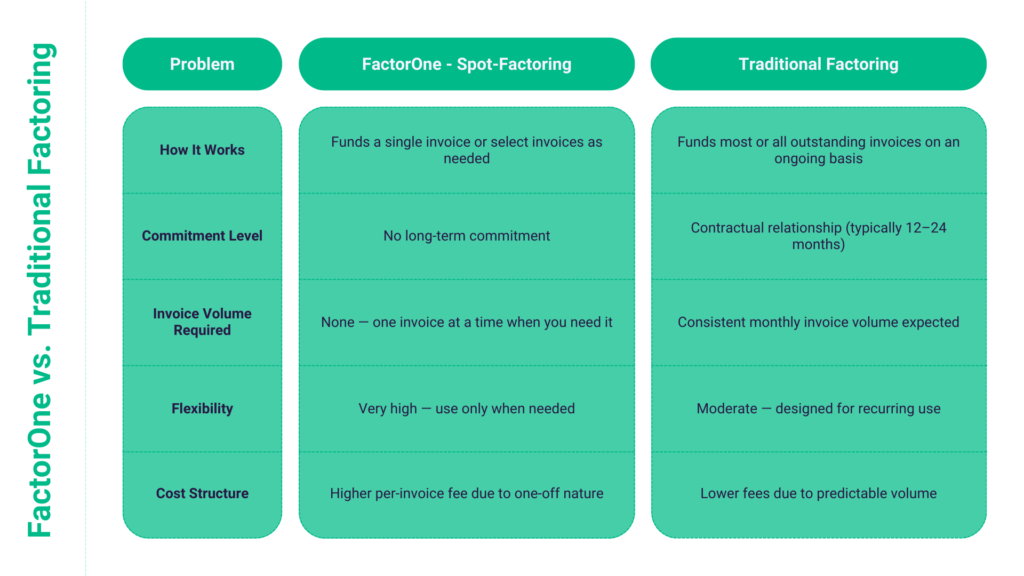
FactorOne is best used when a business needs fast access to cash without committing to a long-term factoring agreement. It’s ideal for companies that only want to fund a single invoice, cover a short-term cash-flow gap, or handle an urgent expense like payroll, materials, or project costs. Businesses often use FactorOne when testing a new customer, managing seasonal or inconsistent invoicing, or when they simply don’t want monthly minimums or ongoing obligations. With a streamlined approval process and no requirement to factor all receivables, FactorOne offers a flexible, one-time funding solution that lets businesses get paid sooner and move on when the need is met.

Traditional factoring is best used when a business has ongoing cash-flow needs and invoices customers consistently. It’s a strong fit for companies that issue invoices every month and want reliable, predictable access to working capital rather than one-off funding. Businesses often choose traditional factoring when they need to support regular expenses like payroll, rent, inventory, or growth-related costs while waiting 30–90 days for customer payments. Because it’s designed for consistent volume, traditional factoring typically offers lower overall fees and may include added support like credit checks, collections, and accounts-receivable management. For established companies focused on stability and scaling, traditional factoring provides a long-term cash-flow solution instead of a temporary fix.